
Buying Guides
Is It Cheaper to Do Your Whole House Blinds at Once? How Bundling Window Treatments Can Work

If you’re planning to replace the blinds or shades throughout your home, one of the first questions you may have is:
Should I do everything at once, or should I complete the house room by room?
There isn’t one answer that works for every homeowner. Your budget, the number of windows, the types of treatments you want, and whether you’re considering motorization can all affect the decision.
But for many homeowners, completing multiple window treatments as one coordinated project can make a lot of sense.
At Camacho Blinds, we help South Florida homeowners look at the entire project—not just one window at a time—so we can determine where bundling treatments may create a better combination of convenience, design, functionality, and overall value.
Why Can Doing Multiple Window Treatments at Once Make Sense?
Ordering window treatments for several rooms at the same time can simplify several parts of the project.
Instead of scheduling separate consultations, measurements, product orders, deliveries, and installations over several months, the project can often be planned as one coordinated upgrade.
That can mean:
-
fewer separate appointments
-
more efficient measuring
-
more coordinated installation
-
easier product and color matching
-
better planning for motorization
-
a more consistent finished look throughout the home
-
potential package or bundled pricing depending on the project
The real advantage isn't simply buying more blinds.
It's being able to design the project as a complete system.
Is It Actually Cheaper to Do All Your Blinds at Once?
Sometimes—but homeowners should understand what “cheaper” actually means.
Window treatments are highly customized. Pricing can change depending on:
-
window dimensions
-
number of windows
-
fabric selections
-
shade style
-
control type
-
manual versus motorized operation
-
electrical requirements
-
installation complexity
-
specialty or oversized openings
Because of those variables, there isn't a universal percentage that every homeowner will save by doing an entire home.
However, combining multiple areas into one project may create opportunities for more efficient project planning and bundled pricing that would not necessarily exist when purchasing one or two windows at a time.
This is why it's worth asking your window treatment company:
“If we're eventually going to do the entire house, what would it look like if we planned everything together?”
The answer may surprise you.
Think Beyond Just the Price Per Window
One mistake homeowners sometimes make is evaluating the project only by asking:
“How much is each shade?”
The better question is:
“What is the best way to complete the home?”
For example, imagine you're planning to install:
-
zebra shades in the main living areas
-
blackout shades in the bedrooms
-
motorized shades on large or hard-to-reach windows
-
a motorized patio screen outside
Those are four different needs, but they are all part of the same larger goal:
making the home more comfortable, private, functional, and convenient.
Planning those treatments together allows the homeowner and installer to make better decisions about the entire home instead of solving each room independently.
You Don't Necessarily Need the Same Shade Everywhere
A whole-home window treatment project does not mean every window needs the exact same product.
In fact, we usually recommend the opposite.
Different rooms have different needs.
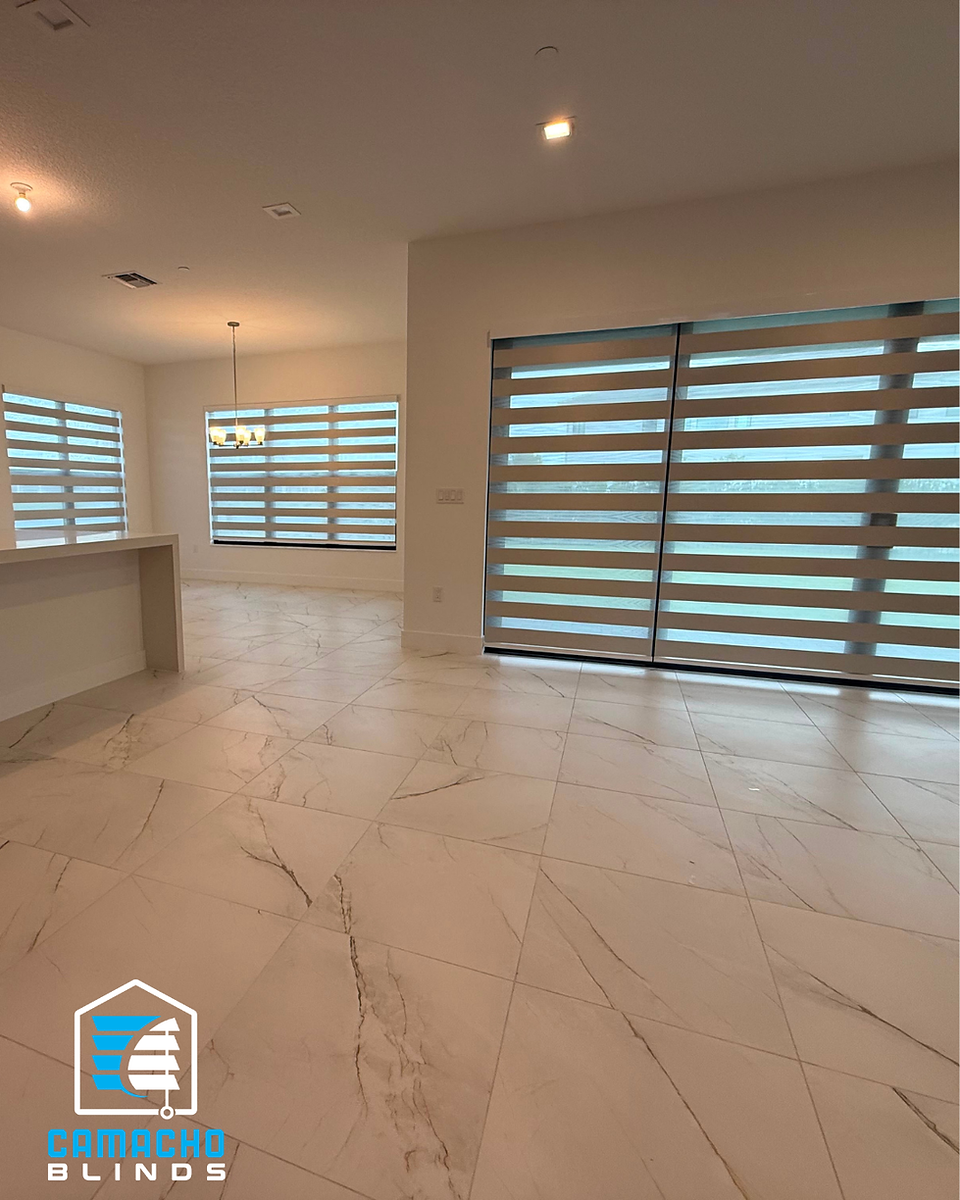
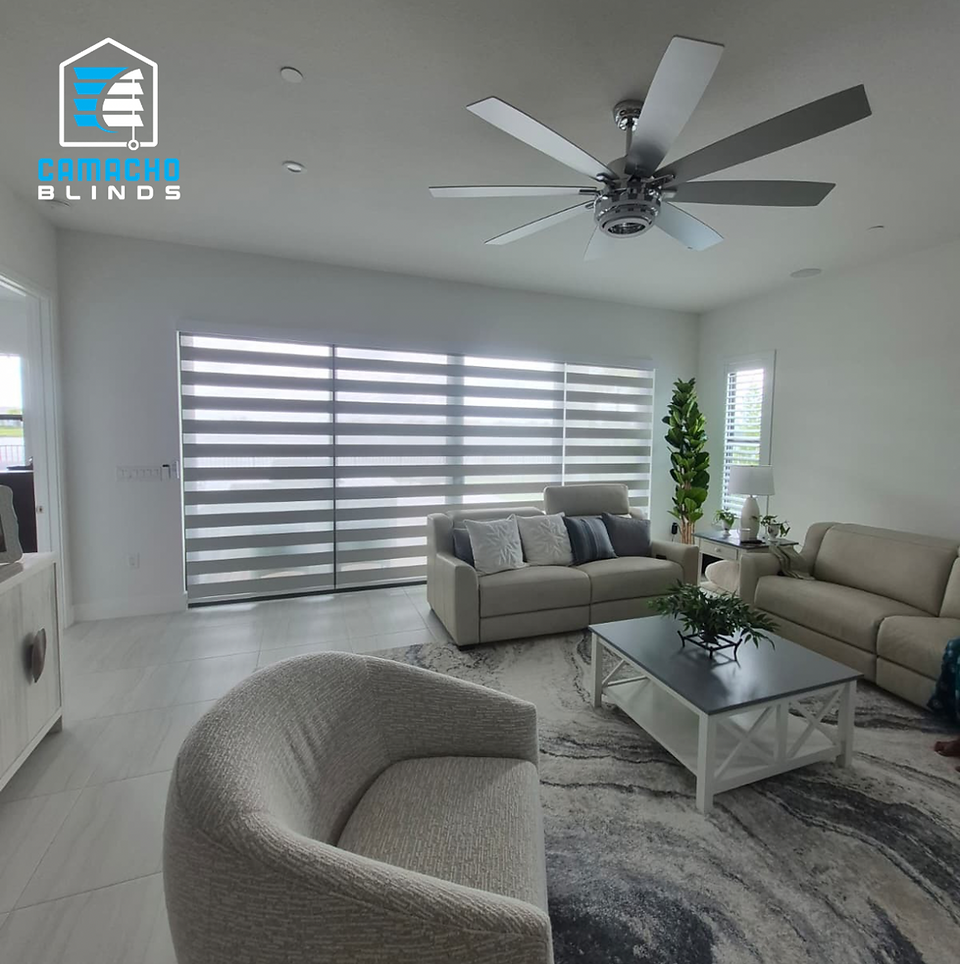
Living Rooms
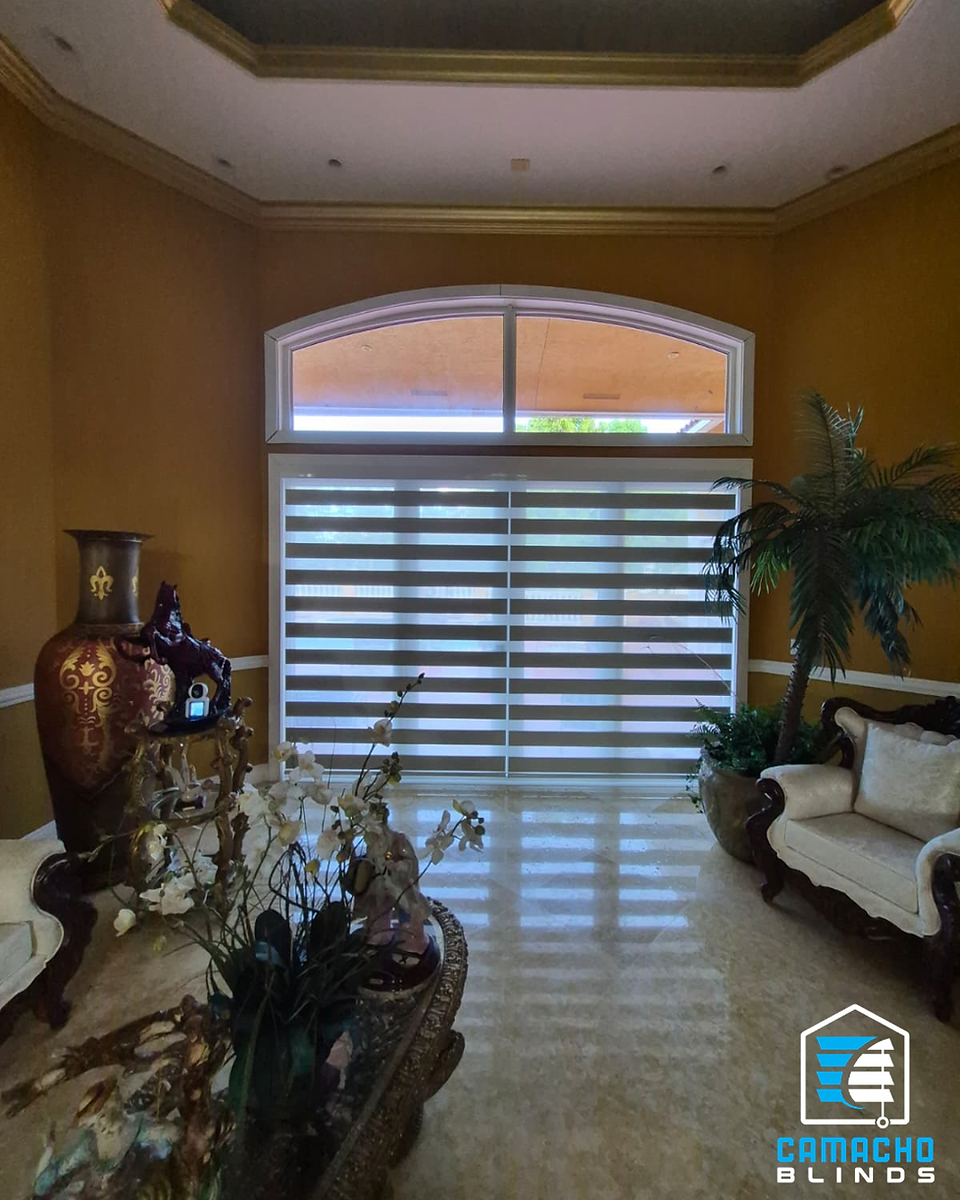
You may want natural light during the day while still reducing glare and improving privacy.
Zebra shades or light-filtering roller shades may work well depending on the space.

Bedrooms
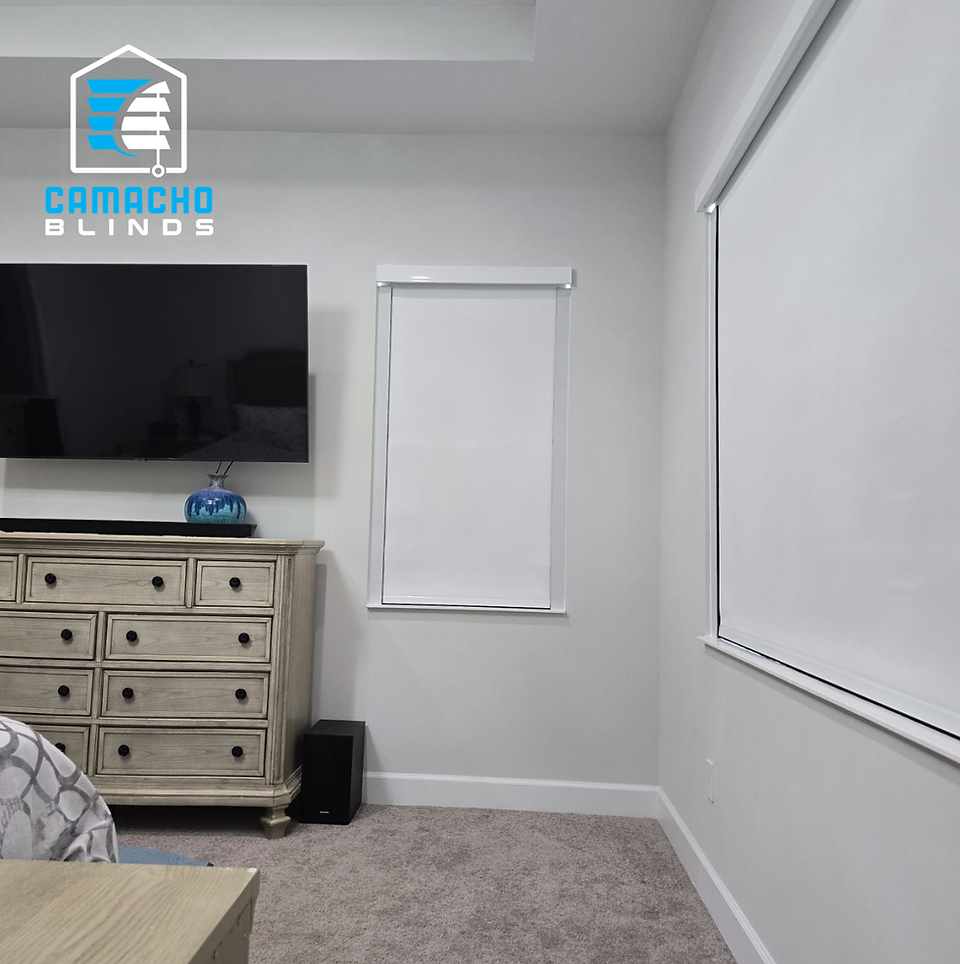
Privacy and room darkening may be much more important.
A blackout roller shade could make more sense.


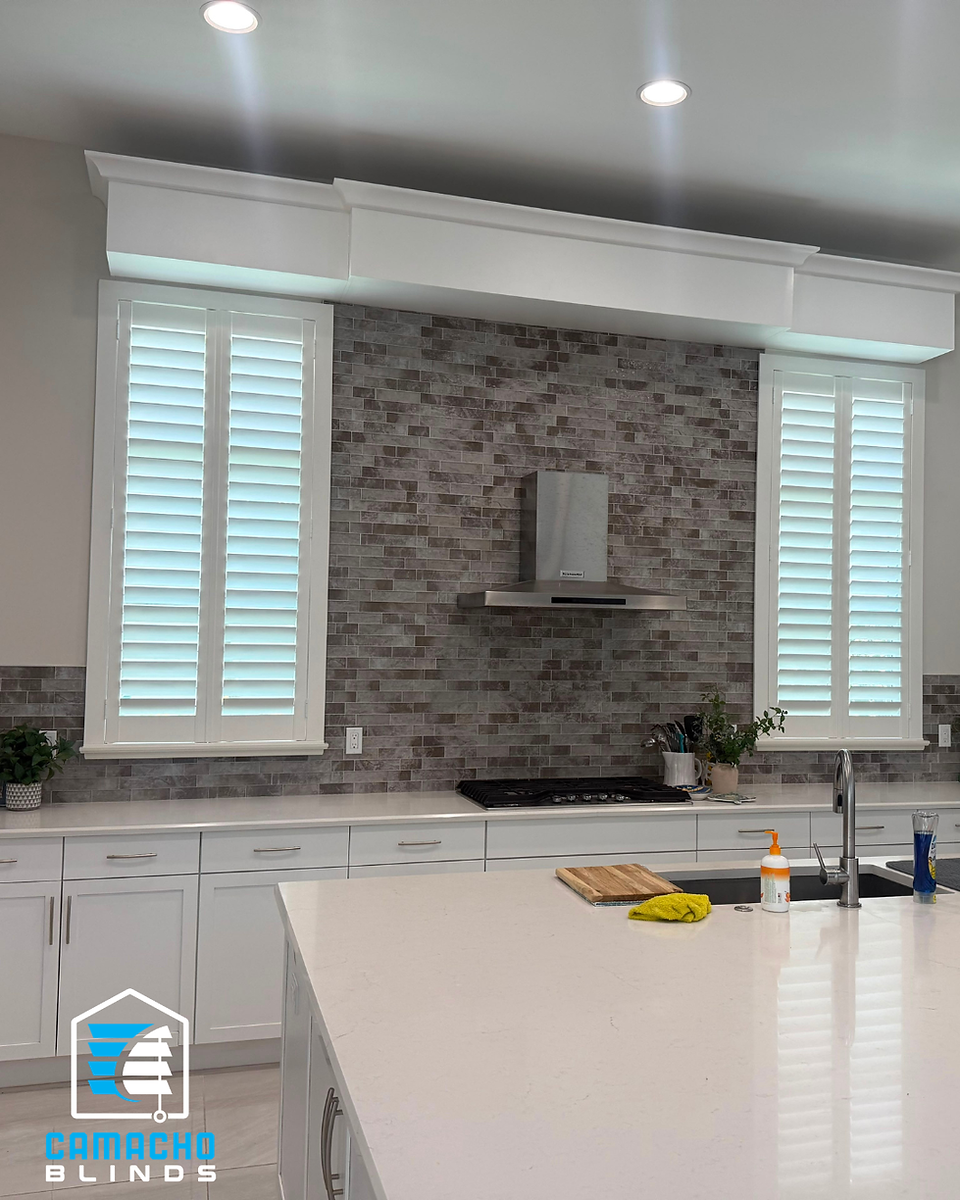
Kitchens and Dining Areas
You may prioritize clean design, easy operation, and controlled natural light.


Large Windows
Motorization may become much more valuable because constantly raising and lowering a large shade manually can become inconvenient.


Patios
The problem may have nothing to do with indoor privacy.
Instead, you may be dealing with:
-
intense afternoon sunlight
-
heat
-
insects
-
glare
-
an outdoor space that doesn't get used as often as you would like
That's where a motorized patio screen may become part of the overall project.
The goal isn't to sell the same product throughout the house.
The goal is to select the right solution for each space while keeping the home visually connected.
Should You Motorize Every Shade in the House?
Not necessarily.
Motorization is one of those upgrades that makes a lot of sense in certain areas and may be unnecessary in others.
We usually recommend looking at how the homeowner actually uses each window.
Motorization can be particularly useful for:
-
large shades
-
tall windows
-
hard-to-reach windows
-
frequently adjusted shades
-
bedrooms where automated routines are useful
-
living spaces with several shades operating together
-
homeowners who want smart-home integration
A small guest-room window that gets adjusted twice a year may not need a motor.
But six large shades across a living room?
That's a very different situation.
A whole-home consultation gives you the opportunity to decide where motorization provides real value and where manual operation may be perfectly fine.
What If You Already Have Manual Shades?
You may not automatically need to replace everything.
Some homeowners already have roller shades or zebra shades they like but wish they were easier to operate.
Depending on the existing shade system, condition, size, tube, brackets, and compatibility, it may be possible to explore converting certain manual shades to motorized operation.
Other times, replacing the shade may make more financial or technical sense.
This is something that should be evaluated before automatically assuming everything needs to come down.
A professional inspection can help answer:
Can this shade be upgraded, or does replacing it make more sense?
What About Smart-Home Control?
This is where planning multiple window treatments together becomes even more useful.
Today's motorized window treatments can go beyond a handheld remote.
Depending on the motor and control system being used, homeowners may be able to operate compatible shades through:
-
a smartphone
-
voice control
-
Alexa
-
Google Home
-
Apple Home-compatible systems
-
automated schedules
-
scenes and routines
A smart-home hub can also help bring compatible motorized treatments together.
Instead of walking around the house adjusting shades individually, you may be able to create routines such as:
Good Morning
Bedroom shades open automatically.
Afternoon Sun
West-facing shades lower during the hottest part of the afternoon.
Movie Night
Living-room shades close together.
Good Night
Selected shades throughout the home close as part of your evening routine.
When motorization and smart-home integration are being considered, planning the system before ordering products becomes much more important.
Can You Bundle Indoor Window Treatments With Motorized Patio Screens?
Absolutely—and this is where homeowners should think about their property as more than just the interior of the house.
Imagine you're already considering a motorized patio screen because your covered patio becomes uncomfortable during certain parts of the day.
At the same time, you may have:
-
builder-grade blinds inside
-
uncovered windows
-
bedrooms needing blackout shades
-
large sliders needing better light control
-
existing shades you want motorized
Instead of treating those as completely separate projects, it may make sense to evaluate them together.
Camacho Blinds can help homeowners construct a bundled project combining exterior and interior window-treatment needs.
That allows us to look at the home as one complete project and determine which treatments make sense for each area.
What Is the Camacho Blinds Combo Approach?
Our philosophy is simple:
If you're already upgrading one major part of your home, let's evaluate whether combining additional window-treatment needs creates a better overall project.
For example, a homeowner installing motorized patio screens may also want to upgrade the interior windows.
Rather than completing the patio today and calling another company six months later for the inside of the house, we can explore both projects together.
Depending on the project, bundling can help create a more coordinated installation while allowing us to evaluate package pricing across the overall scope.
More importantly, you're dealing with one team that understands what you're trying to accomplish throughout the home.
Another Benefit: One Installation Strategy
There's also a practical advantage that doesn't always show up on a quote.
Coordination.
When projects are completed separately, homeowners may go through the same cycle repeatedly:
Consultation.
Measurements.
Product selection.
Scheduling.
Installation.
Cleanup.
Programming.
Then several months later, the process starts again for another room.
With a coordinated project, much of that can be planned together.
At Camacho Blinds, professional measuring and installation are major parts of the finished result. A window treatment can look great online, but correct sizing, placement, programming, and installation determine how it actually performs in your home.
When Does Doing the Whole House NOT Make Sense?
Bundling isn't automatically the best decision.
Doing the project in phases may make more sense when:
-
you're working within a strict renovation budget
-
certain rooms will be remodeled later
-
you're unsure what design direction you want
-
you're replacing only a few broken treatments
-
you're planning future construction around certain windows
-
you want to test a product in one area before using it elsewhere
A good window treatment company shouldn't pressure you into doing more than makes sense.
The goal should be helping you build a plan.
Sometimes that means doing everything together.
Sometimes it means creating Phase 1, Phase 2, and Phase 3 so everything eventually works together.
New Construction Homeowners Should Especially Consider Whole-Home Planning
If you've recently moved into a new construction home in South Florida, this conversation becomes even more important.
Many new homes have beautiful kitchens, floors, lighting, and outdoor spaces but very basic window coverings—or none at all.
Instead of buying temporary blinds for several rooms and replacing them later, you may want to develop a whole-home window-treatment plan from the beginning.
That can include:
-
privacy priorities
-
light control
-
blackout needs
-
motorized windows
-
smart-home compatibility
-
patio comfort
-
consistent colors and finishes
You don't necessarily need to purchase everything at once.
But having the plan from the beginning can prevent you from making disconnected decisions.
Questions to Ask Before Bundling Your Window Treatments
Before making your decision, consider these questions:
-
How many windows am I eventually planning to replace?
-
Which rooms need better privacy?
-
Which windows get the strongest afternoon sunlight?
-
Which windows would genuinely benefit from motorization?
-
Do I want to control my shades from my phone?
-
Do I use Alexa, Google Home, Apple Home, or another smart-home system?
-
Do I eventually want automated routines?
-
Is my patio currently uncomfortable because of sun, heat, glare, or insects?
-
Am I planning to upgrade the patio later anyway?
-
Would completing multiple areas together make installation easier for my household?
Once those questions are answered, the project becomes much easier to design.
So, Should You Do All Your Blinds at Once?
If you already know that several areas of your home need window treatments, it's worth getting a price for the complete project before automatically splitting everything into separate purchases.
You may decide to complete the whole home.
You may decide to bundle the most important rooms.
Or you may develop a phased plan that eventually gets you to the same finished result.
The important part is knowing your options before you start spending money.
At Camacho Blinds, we help South Florida homeowners evaluate the home, understand their options, and build a window-treatment plan around the way they actually live.
Whether you're considering manual shades, motorized shades, smart-home integration, or a motorized patio screen, we'll help you determine which solutions make sense—and where bundling the project may provide greater value.
Thinking About Updating More Than One Area of Your Home?
If you're planning new interior window treatments, considering motorization, or thinking about adding a motorized patio screen, you don't have to treat each project separately.
Contact Camacho Blinds to explore your options and see what a customized whole-home or Combo Deal could look like for your home.
Custom fit. Professionally installed. Designed for the way you live.
Frequently Asked Questions
Is it cheaper to buy blinds for the whole house at once?
It can be. Pricing depends on the number and size of your windows, treatment types, fabrics, motorization, and installation requirements. Larger coordinated projects may create opportunities for package pricing and more efficient installation, but homeowners should compare the complete project rather than assuming a fixed percentage of savings.
Do all the blinds in my house need to match?
No. Different rooms can use different products while maintaining a coordinated overall design. Bedrooms may need blackout shades while living spaces may benefit from light-filtering or zebra shades.
Should I motorize all the blinds in my house?
Usually not. Motorization provides the most value on large, frequently used, grouped, tall, or hard-to-reach shades. A consultation can help identify which windows actually benefit from it.
Can existing manual shades be converted to motorized shades?
Some can, depending on the existing shade's construction, size, condition, and compatibility with available motors. Other shades may be better candidates for replacement.
Can motorized shades be controlled from a phone?
Compatible motorized shades can often be connected to smartphone and smart-home control systems through an appropriate hub or integration.
Can I combine motorized patio screens and interior shades in one project?
Yes. Interior window treatments and exterior motorized screens can be evaluated as one coordinated project, allowing the homeowner to address multiple comfort, privacy, and convenience needs together.
Can I do part of my house now and finish the rest later?
Yes. A phased whole-home plan can be a good approach when budget, construction schedules, or other priorities make completing everything at once impractical.


